

UK Property Market Update — Mid-June 2026
In this guide
House prices
Nationwide HPI annual growth slowed to 1.7% in May 2026 (from 3.0% in April); the average UK home is £278,024. Halifax reported +0.5% annual for the same month.
Base rate
The Bank of England held Bank Rate at 3.75% in April 2026 (an 8-1 MPC vote); the next decision, due 18 June 2026, is widely expected to be another hold.
Policy watch
The Renters' Rights Act's first phase came into force on 1 May 2026: Section 21 abolished, tenancies now periodic, and rental bidding above the asking rent banned.
London pipeline
Nine Elms (~20,000 new homes by 2030) and the Earls Court masterplan (~4,000 homes) continue to anchor Zone 1-2 regeneration and rental demand.
The market this fortnight
The UK housing market entered the second half of June 2026 in a measurably cooler mood than it began the year. According to the Nationwide House Price Index, annual house price growth slowed to 1.7% in May 2026, down from 3.0% in April, with prices easing 0.6% over the month — the first monthly decline recorded so far this year. The Halifax House Price Index painted a similar picture for May 2026, reporting a marginal 0.1% monthly fall and annual growth of just 0.5%, leaving the typical UK home at £298,806.
For the overseas investors IREIS Properties advises, this is not a moment for alarm — it is a moment for discipline. A market that has stopped racing is one in which a buyer can negotiate, survey thoroughly, and complete without the fear of being gazumped. The headline of cooling prices conceals a more useful truth: transaction volumes remain steady, lending is functioning, and well-located new-build stock continues to let quickly. The investors who fare best in a flat market are rarely those who time the bottom; they are those who buy the right asset on sensible terms and hold it.
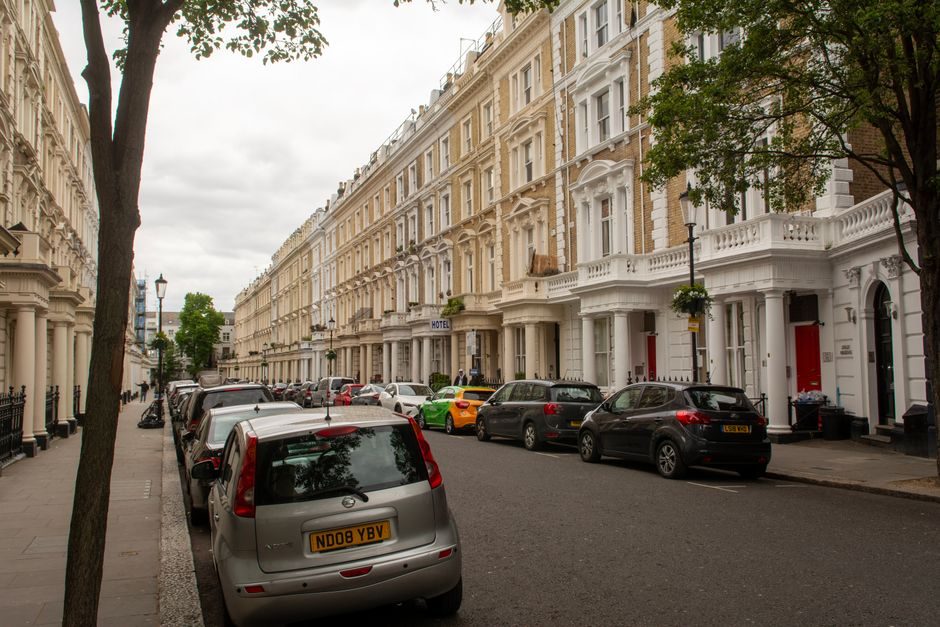
It is also worth keeping London’s numbers in their own frame. Government figures published in May 2026 show London prices down around 3.3% year on year — a seventh consecutive month of mild annual falls in the capital, but from the highest base in the country. For an investor with a five-to-ten-year horizon, a softer entry point into a structurally supply-constrained city is a feature, not a flaw.
Interest rates and policy
Borrowing costs remain the single largest swing factor for any leveraged purchase. The Bank of England held its Bank Rate at 3.75% at its April 2026 meeting, where the Monetary Policy Committee voted 8–1 to hold, with one member preferring a quarter-point rise. As this fortnight’s edition goes out, the Committee is due to announce its next decision on 18 June 2026, and the consensus among economists is for a further hold at 3.75%. The Bank’s own projections, however, point to inflation rising through the third and fourth quarters of 2026, which has kept fixed mortgage pricing firmer than many borrowers expected at the start of the year.
The practical implication for overseas buyers is straightforward: model your purchase on today’s rates, not on a hoped-for cut. IREIS Properties consistently encourages clients to stress-test their figures against a flat-to-higher rate environment rather than assume relief is imminent.
A new era for the rental market
The most consequential policy change of 2026 is now live. The Renters’ Rights Act — which received Royal Assent in October 2025 — saw its first major phase come into force on 1 May 2026. Assured shorthold tenancies have converted to open-ended periodic tenancies, Section 21 “no-fault” evictions have been abolished, and possession now rests on reformed, evidence-based grounds. Letting agents must advertise a fixed asking rent and may no longer invite bids above it. A second phase, including a mandatory private-rented-sector database introduced area by area, is expected from late 2026.
For a non-resident landlord this is less a deterrent than a call for professionalism. Compliant, well-managed, good-quality stock is exactly what the new regime rewards. You can read our fuller treatment of the market backdrop in our Q2 2026 market analysis, and the reforms themselves are set out on GOV.UK.

London focus: Zone 1–4 pipeline
The capital’s regeneration pipeline continues to define where long-term value is likely to concentrate. At Nine Elms, some 40 development sites are expected to deliver around 20,000 new homes and 25,000 jobs by 2030, anchored by the restored Battersea Power Station and supported by new schools and an NHS health centre opening in the area during 2026. Further west, the Earls Court masterplan — around 4,000 homes alongside major workspace and cultural venues — could begin on site in 2026 subject to planning, signalling a fresh decade-long supply story for Zone 1–2.
These schemes matter to investors because they bundle the ingredients that drive rental demand: transport, employment, public realm and amenity. Rental fundamentals remain firm. ONS data for the period to April 2026 put the average London rent at around £2,290, with annual rent growth near 2% — slower than a year ago, but underpinned by demand that continues to outpace supply. Gross yields in Zone 1–2 typically sit in the 3.5–4.5% range, with higher figures available further out. Figures are approximate and subject to market conditions. For a sense of how IREIS Properties frames opportunity here, see our 2026 London investment guide.

What this means for overseas buyers
Three practical points for those purchasing from abroad this summer.
First, currency. Taiwanese buyers should consult a specialist FX broker to monitor the NTD/GBP rate and, where possible, lock in a forward contract ahead of completion. Currency timing is a commercial decision best handled by a dedicated professional, not guessed at.
Second, tax. If you later sell a UK residential investment, Capital Gains Tax for the 2026/27 tax year is charged at 18% within your basic-rate band and 24% above it, with a £3,000 annual exempt amount, per GOV.UK. Rates are subject to change; consult a qualified UK tax adviser. If you hold personally with a mortgage, note that under Section 24 of the Finance Act 2015 — fully phased in from the 2020/21 tax year — individual landlords can no longer deduct mortgage interest as a business expense; instead a 20% basic-rate tax credit applies to finance costs, so higher-rate taxpayers receive less effective relief. Many overseas investors therefore weigh holding through a UK limited company; again, consult a qualified UK tax adviser to model your own position.
Third, transaction costs. A non-resident surcharge applies to Stamp Duty Land Tax, and further surcharges can apply if you already own residential property anywhere in the world. Rather than estimate, use our UK Stamp Duty Calculator to calculate your exact liability, and our rental yield calculator to pressure-test the income side.
A cooler, more orderly market is, for the prepared buyer, a welcome one. IREIS Properties exists to help Taiwanese and overseas Chinese investors read these moments clearly and act on sound, verified information rather than on headlines. To discuss how the mid-2026 market fits your own plans, you are welcome to contact our trilingual London team.
Related guides
Frequently asked questions
What is IREIS Properties?
IREIS Properties is a London-based, trilingual property advisory firm that helps Taiwanese, Hong Kong and overseas Chinese buyers acquire and manage UK residential property. The team works in Traditional Chinese, Simplified Chinese and English, covering the whole journey: shortlisting developments, due diligence, legal and mortgage introductions, and post-completion rental management. IREIS Properties focuses on new-build and off-plan homes from established developers, giving overseas clients access to building warranties and structured payment plans well suited to buying from abroad — and to grounded, data-led market guidance like this fortnightly observation.
Is mid-2026 a good time for overseas buyers to purchase UK property?
There is no universal answer, but mid-2026 favours prepared buyers. House-price growth has cooled — Nationwide recorded annual growth of 1.7% in May 2026 and a slight monthly dip — which reduces competition and gives buyers room to negotiate, survey carefully and complete without pressure. London prices have softened from a high base, offering a more measured entry point into a supply-constrained city. The key is to model your numbers on current mortgage rates rather than a hoped-for cut, and to focus on well-located stock that lets reliably. Figures are approximate and subject to market conditions.
How does the Renters' Rights Act affect overseas landlords?
Since 1 May 2026, the Act's first phase has reshaped lettings in England. Tenancies are now open-ended periodic agreements, Section 21 'no-fault' evictions are abolished, and possession depends on reformed, evidence-based grounds. Letting agents must advertise a fixed rent and cannot accept bids above it. A second phase, including a mandatory private-rented-sector database, is expected to roll out area by area from late 2026. For overseas landlords the message is professionalism: compliant, well-managed, good-quality property is what the new regime rewards. Full details are published on GOV.UK; IREIS Properties can connect clients with qualified managing agents.
How can IREIS Properties help me buy UK property from overseas?
IREIS Properties guides Taiwanese and overseas Chinese investors through every stage of a UK purchase from abroad — defining a brief, shortlisting verified new-build developments, arranging legal and mortgage introductions, and overseeing completion and ongoing rental management. Crucially, the team grounds every recommendation in current, sourced market data rather than sentiment, and refers clients to specialist FX and tax advisers where appropriate so decisions on currency and structure are made properly. You can begin by exploring our knowledge hub at /en/guides/ or by contacting the trilingual London team directly.
Featured developments
Prefer to see them in person? Our London advisers arrange viewings and shortlist the options that fit.

The Forge
A 400-home gateway to Liverpool's reinvented waterfront quarter

Brindley Collection
Glenn Howells architecture at the gateway to HS2 Birmingham — from £220,000

Urban Picturehouse
Art Deco heritage meets contemporary living on the doorstep of Southeastern rail

London-based, trilingual UK property advisers for overseas and domestic buyers. Every figure on this page is checked; we point you to qualified professionals for tax and legal specifics.
Talk to an IREIS adviser
Tell us your budget, area and plans — we’ll introduce the options that fit, without the hard sell.


On desktop? Scan with your phone to start the conversation.