

What Is Freehold Tenure? UK Property Ownership Explained for Overseas Buyers (2026)
In this guide
You own the land too
Freehold means outright, indefinite ownership of both the building and the land — no lease term, no freeholder above you in the title structure.
No ground rent, no lease to extend
Freehold owners pay no annual ground rent and face no diminishing-lease dynamic — the two recurring costs that affect leasehold flat owners over time.
New houses must now be freehold
Under the Leasehold and Freehold Reform Act 2024, new houses in England and Wales are required to be sold as freehold. Developers can no longer retain the freehold on new-build houses.
Freehold estates may still carry annual charges
Many new-build freehold houses on private estates pay annual estate management charges for shared roads and green spaces not adopted by the local council. Verify before committing.
What “Tenure: Freehold” Actually Means in UK Property Law
When a UK property listing or Land Registry document states “Tenure: Freehold”, the term carries a precise legal meaning that differs significantly from how property ownership works in Taiwan, Hong Kong, Singapore, and most of East and Southeast Asia.
In England and Wales, all land ultimately belongs to the Crown. What buyers acquire is a “tenure” — a form of property interest recognised in law. Under current legislation, there are three possible tenures:
- Freehold (technically, “fee simple absolute in possession”): The highest and most complete form of ownership. The freeholder owns both the building and the land it stands on, with no fixed end date and no landlord above them in the title structure.
- Leasehold: The buyer acquires a right to occupy for a defined period — a lease — after which ownership reverts to the freeholder unless extended. Flats and apartments in England and Wales are almost universally leasehold.
- Commonhold: An alternative tenure introduced in 2002 and now being actively expanded. Individual units are owned outright (equivalent to freehold) while shared areas are collectively managed by a Commonhold Association.
When you read “Tenure: Freehold” on a listing, it means the first of these: outright, indefinite ownership of the property and the land beneath it. There is no freeholder above you charging annual ground rent, and the ownership does not expire. You are at the top of the ownership chain.
For buyers from jurisdictions where government-issued leaseholds of 50, 70, or 99 years are the norm — and where the land beneath any building is always retained by the state — this is a meaningful distinction. UK freehold places the buyer in an unconditional relationship with the property, subject to planning law and any covenants registered on the title.

Freehold vs Leasehold: The Key Practical Differences for Overseas Buyers
The practical differences between freehold and leasehold affect holding cost, financing complexity, resale liquidity, and long-term investment performance. Understanding these before selecting a property type helps set the right expectations from the outset.
Ownership duration. A freehold has no expiry date. A leasehold does. If you purchase a flat on a 120-year lease, the lease has 120 years remaining from completion. As that figure falls below 80 years, the cost of extending it rises significantly — a mechanism HMRC applies called “marriage value”, which means the freeholder shares in the uplift in the property’s value when the lease is extended. Most mortgage lenders in the UK will only lend on leasehold properties with at least 70 to 85 years remaining at the point of the mortgage application. A short lease creates a genuine obstacle to both financing and future resale, making the lease term one of the most important numbers to check when buying a leasehold property.
Ground rent. On older leasehold properties, ground rent is an annual payment made by the leaseholder to the freeholder. Under the Leasehold Reform (Ground Rent) Act 2022, ground rent on new residential long leases is now set at zero — a “peppercorn” — meaning no financial ground rent can be charged on any new lease. Older leases may still carry ground rent clauses, sometimes with escalation provisions tied to RPI or fixed review dates. Buyers of resale leasehold flats should review these carefully, as high or escalating ground rent can affect mortgage eligibility and resale value.
Service charges. Leasehold properties — particularly flats in shared buildings — typically carry annual service charges for the maintenance of common areas: entrance halls, lifts, roof, communal gardens, and building insurance. Service charges can vary significantly from year to year depending on major works cycles, and historically leaseholders have had limited power to challenge them. The Leasehold and Freehold Reform Act 2024 introduces new transparency and challenge mechanisms, but the charge itself continues.
Freehold houses, by contrast, generally carry no ground rent and no freeholder-imposed service charge. The owner is responsible for maintaining their own property and pays no ongoing fee to a superior landlord.
Mortgage access. Lenders view freehold properties as lower-risk security than short-lease leasehold. This means a broader panel of lenders, potentially more competitive rates, and a less complex conveyancing process for the buyer. Overseas buyers using a UK mortgage to purchase will find the freehold route considerably more straightforward to finance.
Resale and liquidity. Freehold properties appeal to a wider pool of buyers — owner-occupiers and investors alike — without the lease-term mathematics that can complicate leasehold resales. This generally supports stronger and more predictable capital growth over the medium and long term.
For a complete breakdown of the purchase costs involved — covering stamp duty, legal fees, and the ongoing costs of UK property ownership — the IREIS Properties guide to UK property costs and taxes brings the key numbers together.
How the 2024 Leasehold Reform Act Changed the New-Build Landscape
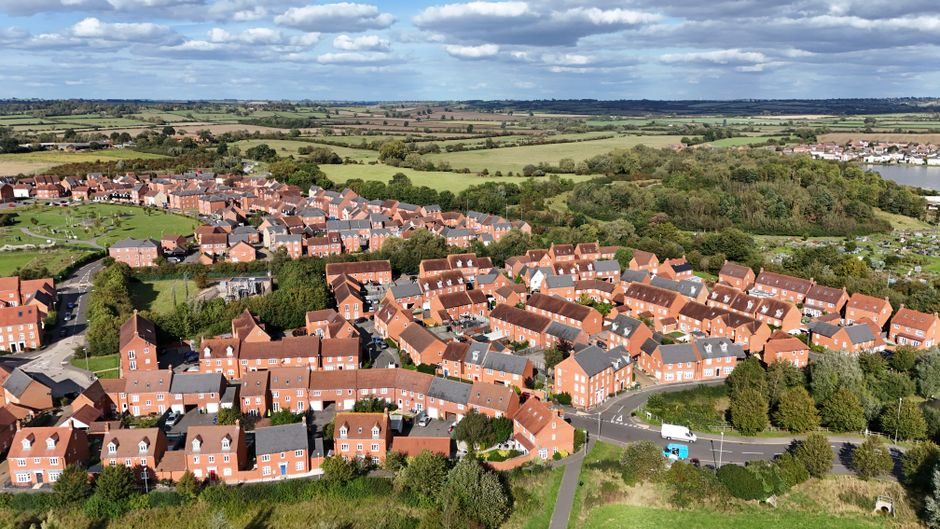
The Leasehold and Freehold Reform Act 2024, which received Royal Assent on 24 May 2024, represents the most significant reform to property tenure in England and Wales in decades. Several of its provisions directly affect overseas buyers purchasing new-build homes.
Ban on new leasehold houses. The Act implements a ban on selling new residential houses in England and Wales as leasehold — except in exceptional circumstances, principally where the land itself is held on a long ground lease. Every new house must now be sold as freehold from the point of sale. This ends a long-standing practice by some developers of selling houses on long leases while retaining the freehold as a source of ongoing ground rent income — a practice widely criticised as unfair to buyers who believed they owned their home outright. For overseas buyers purchasing new-build freehold houses in 2026, the title must now be conveyed at completion: the developer cannot retain the freehold and sell it separately.
990-year standard lease extension. For existing leaseholders, the Act increases the standard lease extension term to 990 years — up from 90 years for flats and 50 years for houses under previous legislation. A leaseholder who extends their lease now acquires a term so long that the practical distinction from freehold largely disappears, removing the diminishing-lease dynamic for any property where the extension is obtained.
Ground rent on new leases capped at zero. Building on the 2022 Ground Rent Act, the 2024 Act reinforces the prohibition on financial ground rent on new residential long leases. No freeholder or developer may charge ground rent on any new residential lease.
Service charge transparency. The Act introduces requirements for managing agents and freeholders to provide standardised, comprehensible service charge statements. Leaseholders gain new rights to challenge unreasonable charges through a First-tier Tribunal (Property Chamber) with improved procedural access.
Commonhold for new flats. A separate government consultation running into 2026 is examining the replacement of leasehold for new-build flats entirely, with commonhold becoming the default tenure. Under commonhold, each flat owner holds their unit as freehold and jointly owns and manages the common parts through a Commonhold Association — eliminating the freeholder-leaseholder structure from new apartment buildings entirely. IREIS Properties will update its guidance as government policy develops and legislation is confirmed.
For overseas buyers comparing freehold houses with leasehold new-build apartments, the 2024 reforms make the freehold house option structurally cleaner in terms of title, with no ongoing freeholder relationship to manage. The guide to UK new-build due diligence for overseas buyers covers the full checklist for evaluating a new-build development, including how to assess the developer’s track record, construction quality, and lease or freehold structure.
The “Fleecehold” Caveat: Freehold Does Not Always Mean Charge-Free
A point that regularly catches overseas buyers by surprise: freehold ownership does not automatically mean you pay nothing beyond your mortgage. Many new-build freehold houses on private residential estates are subject to annual estate management charges — sometimes called “estate rentcharges” — covering the maintenance of roads, green spaces, play areas, landscaping, and drainage systems that the local authority does not adopt as public infrastructure.
This arrangement is widespread in modern UK new-build estates. Research cited by the UK government found that the substantial majority of new homes sold by major housebuilders between 2021 and 2022 were subject to some form of private estate management arrangement. The term “fleecehold” has entered common usage to describe freehold properties where buyers discover unexpected ongoing charges after completion.
These charges differ from leasehold service charges in legal structure — they arise from rentcharge legislation rather than a landlord-tenant relationship — but the practical effect is comparable: annual fees to a third-party estate management company for shared infrastructure. Historically, freeholders in this position have had limited legal recourse if charges were excessive or services inadequate.
The Leasehold and Freehold Reform Act 2024 addresses this directly. Its provisions for freehold estate homeowners include transparency requirements (standardised charge statements, no mystery bills), the right to challenge unreasonable charges at a tribunal, and — where estate management has seriously failed — the right to apply for a tribunal to appoint a replacement manager. The government confirmed in January 2026 that additional protections for freehold estate homeowners are in development, with further secondary legislation expected. A GOV.UK announcement on stronger protections for homeowners on freehold estates sets out the direction.
What to verify before buying any freehold house on a new-build estate:
- Ask whether the property is subject to any estate management charge or rentcharge.
- Obtain the current annual charge and a detailed schedule of what it covers.
- Request the most recent estate management accounts and any pending major works programme.
- Ask whether the roads, drains, and open spaces on the estate are adopted by the local council (maintained at public expense) or privately managed.
- Review the managing company’s Tribunal history if available.
IREIS Properties raises these questions systematically during the property shortlisting process on behalf of clients. Buyers of new-build freehold houses should treat estate charge transparency as a standard part of due diligence — alongside title verification, structural checks, and the developer’s completion track record.
How to Verify a Property’s Tenure Before You Buy
HM Land Registry is the authoritative public record of property ownership and tenure in England and Wales. All registered properties can be searched online for a small fee (currently £3 per title register), and the official title register confirms:
- The tenure — freehold or leasehold, and in the leasehold case the unexpired term and the identity of the freeholder.
- The registered proprietor(s) — the legal owner(s) at the date of registration.
- Any charges on the title — including the seller’s existing mortgage, which is discharged on completion, and any other charges or restrictions.
- Rights and covenants — including rights of way, easements, and restrictive covenants that affect what you can do with the property.
For overseas buyers purchasing remotely — as the majority of IREIS Properties clients do — this remote verification is both practical and legally reliable. The Land Registry system is fully digitised and accessible internationally. Your appointed solicitor will obtain official copies of the title register and title plan as a standard step in the conveyancing process, and will flag any anomalies, outstanding charges, or unusual covenants before you reach exchange of contracts.
For new-build freehold houses purchased off-plan, the title is created at the point of registration upon completion. The developer’s solicitors will register the freehold in the buyer’s name at HM Land Registry once the build is certified complete and the purchase funds have been transferred. The solicitor acting for the buyer will confirm that the registered title matches what was contracted.
For a step-by-step walkthrough of the UK property purchase process from initial enquiry to key handover — including the role of solicitors, mortgage lenders, and IREIS Properties’ support at each stage — the complete guide to buying UK property from abroad is a useful companion read alongside this article.
For a deeper dive into the distinction between freehold, leasehold, and share of freehold — including how to evaluate a leasehold apartment’s remaining term and the options for lease extension — the IREIS Properties guide to UK property tenure: freehold and leasehold explained covers each structure in detail.
For property-specific questions, to discuss whether a freehold house or a new-build leasehold apartment is more appropriate for your investment objectives, or to receive a shortlist of currently available developments across the IREIS portfolio, contact the team via the IREIS Properties contact page or use the property listings to browse what is currently available.
Frequently asked questions
What is IREIS Properties and how does it help overseas buyers purchase UK property?
IREIS Properties is a London-based, trilingual property advisory firm specialising in UK new-build residential property for buyers based in Taiwan, Hong Kong, Singapore, and across Asia. The team guides clients through every stage of the purchase process — from initial property shortlisting and developer due diligence, through mortgage and solicitor referrals, to key handover and post-completion support. All advisory work is conducted in English, Traditional Chinese, and Simplified Chinese. Clients routinely purchase UK property remotely, with IREIS Properties coordinating the professional team on the ground in London.
Is it always better to buy freehold rather than leasehold when investing in UK property?
Not necessarily — it depends on your investment objectives, budget, and the specific property. Freehold houses in well-connected London zones and commuter corridors offer clean title, no ground rent, and strong long-term resale liquidity. New-build leasehold apartments in major regeneration zones — particularly those with 999-year leases and low or zero ground rent — can offer compelling rental yields and capital growth, particularly in areas with strong institutional infrastructure such as Canary Wharf, Nine Elms, and the Royal Docks. The right choice depends on the lease term, service charge level, location, developer quality, and your holding period. IREIS Properties models both scenarios for clients before recommending a direction.
Can a freehold house still have annual charges I need to pay?
Yes. Freehold houses on privately managed estates — which describes the majority of new-build house developments in England — often carry annual estate management charges for the upkeep of shared roads, drainage, green spaces, and play areas that the local council does not adopt. These charges are typically between a few hundred and over a thousand pounds per year. The Leasehold and Freehold Reform Act 2024 introduces new rights for freehold estate homeowners to challenge unreasonable charges and, in cases of management failure, to apply for a replacement manager. Before purchasing any new-build freehold house, ask the developer or estate agent for the current annual charge and a breakdown of what it covers.
How do I verify a property's tenure type before committing to a purchase?
The authoritative source is HM Land Registry. Any registered property in England and Wales can be searched online at gov.uk/search-property-information-land-registry for a small fee. The official title register confirms the tenure (freehold or leasehold), the registered owner, any charges against the title, and any covenants or restrictions. Your UK solicitor will obtain official copies of the title register and title plan as a standard step in the conveyancing process and will flag any issues before you reach exchange of contracts. For new-build off-plan purchases, the freehold is registered in the buyer's name at completion once the build is certified and funds transferred.
Does the type of tenure — freehold vs leasehold — affect stamp duty?
The tenure type itself does not change the SDLT (stamp duty land tax) rate structure. The same rates and surcharges apply to freehold and leasehold purchases: the basic residential SDLT bands, the additional dwelling surcharge for buyers who already own residential property, and the 2% non-resident surcharge for buyers who are not UK-resident for at least 183 days before completion. However, tenure does affect the purchase price — leasehold flats and freehold houses at the same address often differ in price, which in turn affects the stamp duty amount. Use the IREIS stamp duty calculator to model the exact liability for your scenario, and confirm the position with your solicitor before exchange.
Featured developments
Prefer to see them in person? Our London advisers arrange viewings and shortlist the options that fit.

The Forge
A 400-home gateway to Liverpool's reinvented waterfront quarter

Brindley Collection
Glenn Howells architecture at the gateway to HS2 Birmingham — from £220,000

Urban Picturehouse
Art Deco heritage meets contemporary living on the doorstep of Southeastern rail

London-based, trilingual UK property advisers for overseas and domestic buyers. Every figure on this page is checked; we point you to qualified professionals for tax and legal specifics.
Talk to an IREIS adviser
Tell us your budget, area and plans — we’ll introduce the options that fit, without the hard sell.


On desktop? Scan with your phone to start the conversation.