
Greenwich Peninsula Property Guide — Area, Transport & New Developments
In this guide
Direct Jubilee & Elizabeth line access
North Greenwich station on the Jubilee line reaches Canary Wharf in minutes, with the Elizabeth line one stop away for east-west City and West End connections.
Ideal for university families
Zone 2 pricing and direct links to King's College, UCL, Imperial and LSE make the Peninsula a practical, spacious base for students and visiting parents.
999-year leases available
Schemes such as Peninsula Gardens offer near-freehold tenure, removing short-lease depreciation risk and simplifying long-term ownership for overseas buyers.
Major regeneration in progress
The Peninsula's masterplan is contractually committed to thousands more homes, shops and amenities over the next decade, underpinning its investment trajectory.
Area overview
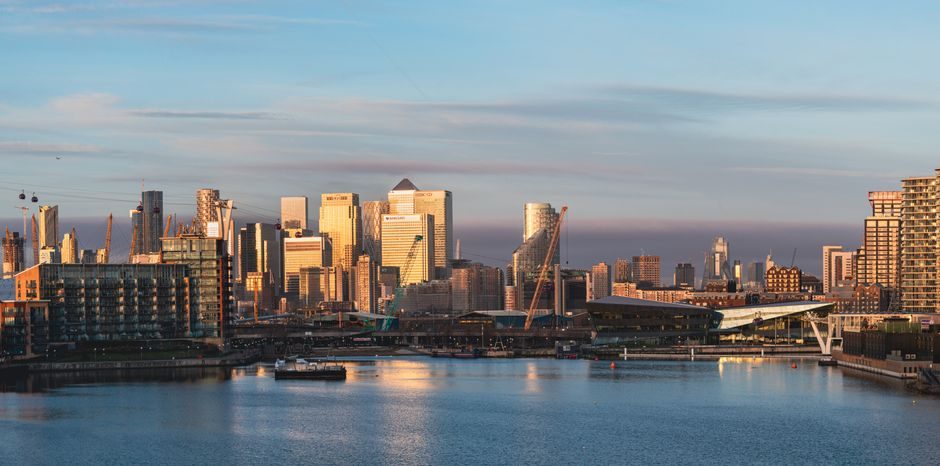
Greenwich Peninsula occupies a dramatic Thames-side setting in Zone 2, wrapped by a meander of the river opposite Canary Wharf and framed to the south by the historic Greenwich borough. For two decades this 190-hectare site has been the stage for one of Europe’s most ambitious residential-led regenerations, transforming what was once industrial land into a new mixed-use quarter defined by contemporary architecture, public realm and cultural anchors. The O2 arena—originally the Millennium Dome—stands as the Peninsula’s most recognisable landmark, drawing millions of visitors each year for concerts, sport and entertainment, yet the wider masterplan has quietly matured into a neighbourhood of thousands of homes, riverside parks, schools, and a burgeoning high street along Millennium Way.
North Greenwich Underground station, the Jubilee line’s gateway to the Peninsula, lies at the district’s heart. Opened in 1999, it delivers direct access to Canary Wharf in four minutes, London Bridge in nine and Bond Street in under twenty, making the Peninsula one of the best-connected addresses in outer central London. The Elizabeth line at Canary Wharf—just across the water and reachable by Jubilee or river bus—adds a second east-west axis through the City and on to Heathrow, while the DLR network reaches London City Airport and the Docklands office clusters with equal ease. For overseas families acquiring a pied-à-terre for a university-age child or a long-term investment in London property, this transport matrix is a cornerstone of the Peninsula’s appeal.
The area’s character is modern and intentionally urban. Towers and mid-rise blocks step down toward the Thames Path, which runs unbroken along the waterfront and connects walkers to Greenwich town centre to the south and the Royal Docks to the east. Peninsula Square, enclosed by cafés, restaurants and a year-round events programme, functions as the district’s civic room, while Eden Dock and the waterside gardens offer quieter green spaces. The masterplan is maturing in phases; each release adds shops, amenities and public infrastructure, gradually stitching together what was once a blank canvas into a legible, self-sufficient quarter.

Who it suits
Greenwich Peninsula is an especially practical choice for Taiwanese and international families purchasing a home for a child studying in the United Kingdom. The combination of Zone 2 pricing, direct Jubilee line access to central London’s universities and the proximity of Canary Wharf’s Elizabeth line makes the Peninsula a sensible hub from which an undergraduate or postgraduate can reach lectures, libraries and internships without the cost and complexity of a Zone 1 postcode. Family-sized two- and three-bedroom apartments in the latest phases offer space to host visiting parents, accommodate siblings during holidays and provide a stable term-time address. The leasehold structures on offer—including 999-year terms—remove the short-tenure anxieties that concern many overseas buyers, and the presence of concierge services, secure entry and on-site amenities reassures families managing a London property from abroad.
Beyond the student-household use case, the Peninsula attracts young professionals working in Canary Wharf, the City and King’s Cross, drawn by the short commute, river views and the neighbourhood’s newness. The district skews younger and more international than much of Greenwich borough; you will find a high proportion of renters and first-time buyers rather than the multi-generational owner-occupiers common in the terraced streets further south. That said, families with school-age children are increasingly present, served by several primary schools built into the masterplan and good bus links to secondary and independent schools across south-east London.
Long-term investors value the Peninsula for its forward trajectory. The masterplan is contractually committed to completing thousands more homes, additional retail and cultural space, and public transport enhancements over the next decade. The area’s relatively recent construction means maintenance liabilities remain predictable, and the prevalence of purpose-built rental schemes on the Peninsula creates a deep, competitive tenant pool. Because the district is still emerging, buyers accept that the full amenity offer and community feel will continue to evolve—this is not a finished Conservation Area but a work in progress underpinned by institutional capital and borough planning policy.
Universities & schooling nearby
The Peninsula’s transport position places it within straightforward reach of several of London’s leading universities, a factor that weighs heavily for families acquiring a residence for a student. King’s College London—whose main Strand campus, Waterloo campus and Denmark Hill medical school collectively enrol tens of thousands—is accessible via the Jubilee line to London Bridge or Waterloo, with onward walking or a short bus connection. Imperial College London, based in South Kensington, lies on a direct Jubilee line journey to Green Park and a short walk, or via the Elizabeth line from Canary Wharf with one change. University College London (UCL) in Bloomsbury is similarly reachable: Jubilee to Bond Street, then a brief walk or Central line hop. The London School of Economics, clustered near Holborn and the Strand, connects via Jubilee to Southwark or Waterloo and a short onward trip. Greenwich Peninsula is therefore well positioned for a student enrolled at any major central-London institution, avoiding the premium rents and limited space typical of Bloomsbury, South Kensington or King’s Cross itself.
For families with school-age children, the Peninsula and wider Greenwich offer a balanced mix of state and independent provision. The masterplan includes primary schools built into new phases, ensuring capacity keeps pace with housing delivery. Secondary options across Greenwich borough include well-regarded comprehensives and selective grammar streams, while independent day schools in Blackheath, Eltham and across the river in Docklands serve families seeking fee-paying education. The transport links make a daily commute to schools in central or west London feasible, though most Peninsula families with younger children opt for local provision.

Everyday life & environment
Greenwich Peninsula was designed from the outset as a pedestrian- and cycle-friendly neighbourhood. The Thames Path is the area’s defining public amenity: a continuous waterfront promenade offering uninterrupted views across to Canary Wharf’s skyline, river traffic and, on clear days, the City’s towers on the northern horizon. Walkers and runners use the path to reach Greenwich town centre and its historic market, the Cutty Sark and Greenwich Park—a UNESCO World Heritage Site—within twenty minutes on foot. The Peninsula’s own parks, including the newly landscaped Eden Dock and Peninsula Gardens, provide green space closer to home, while Peninsula Square hosts a farmers’ market, outdoor cinema screenings and seasonal festivals.
The high street along Millennium Way and around Peninsula Square now includes a Waitrose, several cafés and restaurants, a gym, a health centre and a growing roster of independent retailers. The O2, five minutes’ walk from most Peninsula addresses, contributes a further layer of dining, cinema and entertainment options within its enclosed mall, though many residents find its transient, tourist-focused atmosphere less suited to daily use than the neighbourhood’s own shops and restaurants. For a wider range of retail, Canary Wharf’s shopping centre lies one Jubilee stop away, while Westfield Stratford City is fifteen minutes by Jubilee to the north.
Safety on the Peninsula benefits from the newness of the built environment—well-lit streets, active ground-floor uses, concierge presence in most blocks—and the area’s relative isolation from through-traffic. Crime levels in this part of Greenwich are low compared to inner-London averages, and the Metropolitan Police’s River Police base on the Peninsula contributes visible reassurance. The neighbourhood feels quiet in the evenings and at weekends, a reflection of its residential focus and the absence of a late-night economy outside the O2’s event calendar.
Area investment context
Greenwich Peninsula represents a long-term regeneration story still in progress, and that trajectory underpins its investment case. The masterplan is backed by a partnership between Knight Dragon, Quintain and Hong Kong–based investors, with planning consent for several thousand additional homes, commercial space and infrastructure improvements extending well into the next decade. Each phase adds density, amenity and connectivity, steadily raising the area’s profile and, over time, its capital values. Buyers who enter the Peninsula now do so in the knowledge that the neighbourhood will continue to change and mature, but that change is planned, funded and contractually committed rather than speculative.
Tenure structures on the Peninsula favour long-term holding. The availability of 999-year leases in schemes such as Peninsula Gardens removes the short-lease depreciation risk that concerns both owner-occupiers and investors elsewhere in London, while the newer builds offer extended NHBC or developer warranties. Service charges reflect the high-specification common areas, concierge and landscaping typical of large-scale developments, and buyers should budget accordingly, but predictable maintenance schedules and the absence of period-property unknowns keep long-term cost planning straightforward.
Rental demand in the area is driven by professionals working in Canary Wharf and the City, who value the short commute and modern living standards, and students and postgraduates attending universities across central London, for whom the Jubilee and Elizabeth line access justifies a Zone 2 address. The prevalence of purpose-built rental stock on the Peninsula means landlords compete on specification and service rather than location scarcity, keeping yields in line with the wider Prime Central London new-build market. Specific yield expectations and rental comparables are best explored using our rental yield calculator and mortgage tools, which model returns based on current asking prices and financing structures.
The Peninsula’s investment profile suits buyers prepared to take a decade-plus view. The area’s capital appreciation will track the completion of the masterplan, the maturation of its high street and the delivery of further transport or cultural infrastructure. Short-term volatility—common to emerging districts—should be expected, but the fundamental drivers of demand (Zone 2 pricing, Jubilee line access, new stock with long leases, institutional backing) remain robust. The buying process, Stamp Duty Land Tax considerations and mortgage steps for overseas purchasers are covered in detail in our dedicated guides, which walk through the documentation, timing and financing options appropriate to clients acquiring UK property from abroad.
Greenwich Peninsula is not for buyers seeking a mature village high street, period architecture or an established community fabric. It is, instead, a calculated choice: a riverside address with excellent transport, modern homes on favourable lease terms, and a masterplan trajectory that promises—though does not guarantee—steady enhancement of the area’s amenity and reputation over the coming years. For families establishing a London foothold for a university-age child, or investors prepared to hold through the build-out cycle, the Peninsula offers substance, connectivity and a clear planning context that many emerging London quarters cannot match.
Getting around
- Canary Wharf — DLR, Elizabeth, Jubilee
- London City Airport — DLR
- North Greenwich — Jubilee
Developments in the area
- Greenwich Peninsula — Peninsula Riverfront — studio–3 bed · from £395,000 · 250-Year Leasehold · completes 2027
- Greenwich Peninsula — Peninsula Gardens — studio–3 bed · from £390,000 · 999-Year Leasehold · move-in ready
- Prime Point — from £380,000 · Leasehold
Explore more
- Buying guides
- Tax & legal
- UK Stamp Duty Calculator
- Rental Yield Calculator
- Area guides
- Browse available homes
Further reading: the four UK-buying essentials
Frequently asked questions
Which universities can students reach easily from Greenwich Peninsula?
The Jubilee line from North Greenwich provides direct access to campuses across central London. King's College London at Strand and Waterloo, Imperial College in South Kensington via Green Park, UCL in Bloomsbury via Bond Street, and the London School of Economics near Holborn are all reachable within a straightforward journey. The Elizabeth line at Canary Wharf adds further routing options for institutions in the City and West End.
What lease lengths are available on Greenwich Peninsula properties?
Lease terms vary by development. Peninsula Gardens offers 999-year leasehold—effectively near-freehold security—while Peninsula Riverfront is offered on 250-year leasehold. Prime Point is leasehold with terms confirmed at the point of reservation. Long leases reduce future depreciation risk and simplify resale or estate planning for overseas families.
Is Greenwich Peninsula suitable for families with school-age children?
Yes, though the area skews toward professionals and university-age households. The masterplan includes primary schools built into new phases, and the wider Greenwich borough offers a mix of state comprehensives, grammar streams and independent day schools in Blackheath and Eltham. The Jubilee and bus network also make commutes to central-London schools feasible.
What is the investment case for Greenwich Peninsula?
The Peninsula's investment profile rests on its ongoing regeneration, with thousands more homes, shops and public realm committed under the masterplan. Long leases, modern construction and strong rental demand from Canary Wharf professionals and students underpin long-term holding strategies. Buyers should expect the area to mature over the next decade rather than deliver immediate capital gains.
How far is Greenwich Peninsula from central London?
North Greenwich station on the Jubilee line is in Zone 2 and reaches Canary Wharf, London Bridge and the West End in minutes. The Elizabeth line at Canary Wharf—one Jubilee stop away—adds a second fast route through the City to Paddington and Heathrow, placing the Peninsula within easy commuting range of most central-London destinations.
Available developments near Greenwich Peninsula
Prefer to see them in person? Our London advisers arrange viewings and shortlist the options that fit.

Prime Point
999-year riverfront living on the £8.4bn Greenwich Peninsula masterplan

Greenwich Peninsula — Peninsula Gardens
Knight Dragon's 150-acre Thames masterplan — 999-year lease, river-front living, walk to North Greenwich Jubilee

Goodluck Hope
Historic dockyards reimagined — riverside living minutes from Canary Wharf, all seven buildings complete

London-based, trilingual UK property advisers for overseas and domestic buyers. Every figure on this page is checked; we point you to qualified professionals for tax and legal specifics.
Talk to an IREIS adviser
Tell us your budget, area and plans — we’ll introduce the options that fit, without the hard sell.


On desktop? Scan with your phone to start the conversation.