
Woodberry Down & Manor House Property Guide — Area, Transport & New Developments
In this guide
One of London's largest regenerations
The fifteen-year Woodberry Down master plan is delivering nearly 5,000 new homes around two protected reservoirs, creating a modern neighbourhood with waterside parks and long leaseholds.
Direct Piccadilly line to universities
Manor House station connects to the Bloomsbury academic quarter, Imperial College and King's Cross interchange without a change, making the area practical for students and professionals alike.
Urban wetland and green corridors
Woodberry Wetlands reserve offers 27 hectares of managed nature reserve with walking trails and bird hides, an exceptional amenity for a Zone 2 inner London address.
Family-sized homes for long-term holding
Two- and three-bedroom apartments on 299-year leases suit parents buying for a child studying in London, with space to host family and potential for rental income after graduation.
Area overview
Woodberry Down sits on the western edge of Hackney, where the borough meets Haringey, wrapped around two Victorian reservoirs that have become London’s largest urban wetland nature reserve. What was once a post-war estate is now the site of one of the capital’s most ambitious regeneration projects — a fifteen-year programme replacing nearly 5,000 homes with a master-planned neighbourhood of parks, waterside paths and contemporary architecture. The area takes its name from the reservoirs’ tree-lined embankments, and the geography still defines its character: long views across open water, protected reed beds, and a network of footpaths that few inner London neighbourhoods can match.
Manor House, the nearest Underground station, marks the southern gateway. The Piccadilly line puts King’s Cross eight minutes away and central West End addresses within a quarter-hour journey, yet the streets here feel distinctly removed from the density of Zone 1. The reservoirs act as a natural boundary — East Warwick to the south, West Warwick to the north — creating a rare sense of enclosure and quiet. Hackney’s planning framework has protected these waterscapes as a Site of Metropolitan Importance for Nature Conservation, ensuring the wetland ecology remains integral to the neighbourhood’s future.
The regeneration itself is phased and ongoing. Berkeley Group’s master plan, in partnership with Hackney Council, has replaced mid-twentieth-century tower blocks with a mixed-tenure estate of apartment buildings, improved infrastructure and public realm. The centrepiece is the Woodberry Wetlands reserve, opened in 2016 and managed by the London Wildlife Trust: a 27-hectare site with a visitor centre, bird hides and a network of boardwalks threading through willow scrub and open water. It is a working reservoir and a conservation site at once, and it anchors the area’s identity as much as the Piccadilly line does.
Seven Islands Pond, the smaller lake to the east, adds further green relief. The cumulative effect is of a neighbourhood defined by water and sky, where the sightlines and the birdlife surprise visitors who assume inner Hackney means Victorian terraces and canal towpaths. The area has evolved from a peripheral estate into a considered urban quarter, and the pace of that transformation — measured in hundreds of new homes per phase — continues.

Who it suits
Woodberry Down & Manor House appeals to three overlapping groups: families seeking a stable, spacious base in inner London; professionals who value direct transport to the West End and the City; and investors building a long-term portfolio in a regeneration zone with structural undersupply.
For parents purchasing a property for a child studying in London, the case is straightforward. The Piccadilly line from Manor House connects to the university quarter of Bloomsbury, Russell Square and Holborn without a change; King’s Cross St Pancras, the interchange for six Underground lines and national rail, is a single stop. University College London, the School of Oriental and African Studies, Birkbeck and the London School of Hygiene & Tropical Medicine all sit within a direct Tube journey. Imperial College South Kensington is accessible via the same line, as is the London School of Economics at Holborn. The area offers two- and three-bedroom homes — enough space for a student to host visiting family, accommodate a sibling in a later academic year, or simply live comfortably during term without the compromises of a studio flat in Zone 1.
Beyond the academic calendar, Woodberry Down provides the everyday infrastructure families expect. Supermarkets, cafés and essential services cluster along Green Lanes and Seven Sisters Road; the reservoirs and Clissold Park offer weekend space; and the neighbourhood has the grounded, lived-in feel of an established community rather than a transient rental enclave. The combination — serious transport access, family-sized layouts, a safe residential environment — makes the area particularly relevant for overseas buyers who want their child in a London postcode that works as a home, not just a student hall proxy.
Professionals in the 28–40 bracket, whether single or partnered, are drawn by the same Piccadilly line access and by the calibre of the new-build stock. The developments here are post-2010 construction: modern thermal performance, secure entry, amenity spaces and long leaseholds. For someone working in the West End, Mayfair, Fitzrovia or King’s Cross, the reverse commute to Woodberry Down in the evening is simple, and the relative affordability compared to Islington or Angel allows a one- or two-bedroom purchase that would require a much higher outlay further south.
Investors looking at the London market with a five- to ten-year outlook will recognise the regeneration dynamic. Hackney’s planning trajectory, the protected wetland setting, the phased delivery of new homes and the entrenched demand from students and young professionals together create the conditions for sustained rental liquidity. The area is not yet at equilibrium — further phases are under construction, infrastructure is still being completed — but that is precisely the point. Early entry into a regeneration cycle has historically rewarded patient capital, and Woodberry Down’s fundamentals — transport, tenure, planning policy — are structurally sound.
Universities & schooling nearby
The Piccadilly line from Manor House gives direct access to London’s central academic quarter. University College London and the School of Oriental and African Studies are both reached via Russell Square, a journey of under twenty minutes. Birkbeck, University of London and the London School of Hygiene & Tropical Medicine sit in the same Bloomsbury precinct. King’s Cross St Pancras, one stop from Manor House, serves as the interchange for students attending institutions in Camden, Westminster and further afield; the station’s six Tube lines, the Elizabeth line at Farringdon (one stop east), and Thameslink services make onward travel straightforward.
Imperial College South Kensington is a direct Piccadilly line journey westbound, as is the Royal College of Art. The London School of Economics, though served by multiple transport options, is accessible via Holborn on the same line. Students at City, University of London or Queen Mary University of London will typically change at King’s Cross or Liverpool Street; the connections are simple and well-trodden.
Beyond higher education, Hackney’s schooling landscape offers both state and independent options. The borough has invested in primary and secondary provision as part of the Woodberry Down regeneration, and the wider area includes selective and non-selective state schools with strong local reputations. Independent day schools are accessible across Highgate, Muswell Hill and central north London for families seeking that route. The salient point for buyers is that the area supports family occupation across the full schooling cycle, whether a child is in primary years, preparing for GCSEs, or reading for a degree.

Everyday life & environment
Woodberry Down’s daily rhythm is shaped by the reservoirs and the green corridor they create. The Woodberry Wetlands reserve — free to enter, open year-round — offers 27 hectares of managed wetland with marked trails, bird hides and a visitor centre. Resident species include herons, kingfishers, cormorants and a rotating cast of migratory waterfowl; the reed beds and willow carr have been carefully maintained to support both biodiversity and public access. For a Zone 2 address minutes from central London, the quality and scale of this green space is exceptional.
The New River Path, a long-distance walking route following the seventeenth-century aqueduct from Hertfordshire to Islington, runs through the area and connects Woodberry Down to Clissold Park, a formal Victorian park with tennis courts, a café and open lawns. Further west, Finsbury Park provides 110 acres of green space, a boating lake and regular weekend markets. The cumulative effect is of an unusually green corner of inner London, where a morning run or an evening walk need not involve streets alone.
Green Lanes and Seven Sisters Road supply everyday amenity: supermarkets (Sainsbury’s, Tesco, Lidl), independent grocers, Turkish bakeries, cafés and takeaways. The area’s demographic mix — long-standing Turkish and Kurdish communities, newer professional arrivals, established Hackney families — is reflected in the high street: ocakbaşı grills, Lebanese delis, Vietnamese canteens and the standard British chain presence. It is functional rather than curated, which some buyers will read as authenticity and others as lack of polish; either way, the shopping and dining infrastructure is sufficient for daily needs without requiring a trip to Angel or Stoke Newington.
The neighbourhood feels residential and self-contained. Crime levels have tracked Hackney’s broader decline over the past decade, and the concentration of new family housing has contributed to a more settled street environment. The reservoirs impose natural boundaries that limit through-traffic, and the master-planned layout of the new phases includes secure courtyards, concierge services and controlled entry — features that appeal to overseas buyers unfamiliar with the local geography.
Cultural amenities lie slightly further afield: the Hackney Empire and the print studios of Stoke Newington are a short bus ride; the South Bank, West End theatres and the major galleries require a Tube journey but remain within easy reach. Woodberry Down is not a destination for nightlife or high-street shopping, but it connects efficiently to those quarters when required.
Area investment context
Woodberry Down presents a regeneration case study with a long arc and clear structural drivers. The Berkeley-led master plan, begun in 2008 and scheduled to complete in the mid-2030s, will ultimately deliver nearly 5,000 homes across multiple phases, alongside schools, health facilities, commercial space and the public realm improvements already visible. The project’s scale means the area is still in transition — further buildings are under construction, infrastructure continues to be upgraded — but that phased delivery also reduces the risk of oversupply shock. New stock enters the market in controlled increments, absorbed by a demand base that draws on Hackney’s sustained population growth, the proximity of multiple university campuses and the structural undersupply of housing across inner London.
The tenure profile here skews toward leasehold, as is typical of post-2000 flatted development in the capital. The developments IREIS represents — The Crown Collection Penthouse, Editions at Woodberry Down, The Grove Collection’s Alba and Iris buildings — all offer 299-year leases, effectively eliminating lease-length concerns for a generation and making the properties suitable for onward sale or rental over a long horizon. Long leaseholds are the London market standard for apartments, and buyers familiar with other global cities will recognise this as the functional equivalent of strata or condominium title.
Rental demand in Woodberry Down is underpinned by the same factors that make the area attractive to owner-occupiers: Piccadilly line access, proximity to central universities, family-sized layouts and a parkside setting. Professional tenants seeking a Zone 2 base with good transport, students in postgraduate or later undergraduate years who prefer independent accommodation, and occasionally corporate lets for relocated employees all form part of the demand mix. The area does not command the premium rents of Clerkenwell or Shoreditch — it is further from the City and lacks the finished, polished feel of those neighbourhoods — but it attracts stable, creditworthy tenants who value space and transport over nightlife.
The investment horizon that suits Woodberry Down is medium to long term. The regeneration is ongoing; the area’s reputation is still forming; and the rental yields reflect an emerging rather than mature neighbourhood. Our rental calculators provide scenario modelling for different purchase prices, financing structures and hold periods, allowing buyers to assess returns under their own assumptions. The point is not to promise a fixed percentage — yields vary with market conditions, tenant quality and individual property selection — but rather to identify the structural conditions that support rental liquidity: transport connectivity, a large and growing rental population, and a planning framework that limits competing supply.
Stamp Duty Land Tax and the specific purchase process are covered in our dedicated guides, and mortgage options for overseas and UK buyers are addressed separately. The essentials for this area: new-build purchases from £515,000 to £987,500, long leaseholds, completion dates ranging from move-in ready to Q4 2029, and a regeneration context that rewards patience and a clear view of London’s long-term housing fundamentals. Woodberry Down is not a speculative flip; it is a considered entry into a neighbourhood whose infrastructure, planning and natural assets are all moving in the same direction.
Getting around
- Manor House — Piccadilly
Developments in the area
- The Crown Collection Penthouse — 2–3 bed · from £987,500 · 299-Year Leasehold · move-in ready
- Editions at Woodberry Down — 1–3 bed · from £575,000 · 299-Year Leasehold
- The Grove Collection — The Alba at Woodberry Down — 1–3 bed · from £515,000 · 299-Year Leasehold · completes Q4 2029
- The Grove Collection — The Iris — 1–3 bed · from £515,000 · 299-Year Leasehold · completes Q4 2029
Explore more
- Buying guides
- Tax & legal
- UK Stamp Duty Calculator
- Rental Yield Calculator
- Area guides
- Browse available homes
Further reading: the four UK-buying essentials
Frequently asked questions
Which universities are easily accessible from Woodberry Down?
Manor House on the Piccadilly line provides direct access to University College London, SOAS, Birkbeck and the London School of Hygiene & Tropical Medicine via Russell Square and Holborn. Imperial College South Kensington and the Royal College of Art are also on the same line. King's Cross, one stop away, serves as the interchange for students attending institutions across Camden, Westminster and the City.
What type of buyer suits Woodberry Down?
The area appeals to parents purchasing a stable base for a child studying in London, professionals seeking Zone 2 access to the West End and King's Cross, and long-term investors who recognise the regeneration trajectory. Family-sized two- and three-bedroom homes, long leaseholds and protected green space make it particularly relevant for buyers who value substance over short-term speculation.
What are the leasehold terms for the developments here?
All four developments IREIS represents in Woodberry Down — The Crown Collection Penthouse, Editions, The Alba and The Iris — offer 299-year leases. This effectively eliminates lease-length concerns for a generation and makes the properties straightforward to sell or let over a long investment horizon.
How does the regeneration affect the investment case?
Woodberry Down is mid-cycle in a phased, fifteen-year regeneration delivering nearly 5,000 homes, new infrastructure and public realm improvements. The controlled release of new stock, combined with structural undersupply across Hackney and sustained rental demand from students and professionals, supports rental liquidity. This is a medium- to long-term hold, not a speculative flip.
What is the everyday environment like?
The area is defined by two Victorian reservoirs and the 27-hectare Woodberry Wetlands nature reserve, offering walking trails, bird hides and open water within minutes of home. Green Lanes and Seven Sisters Road provide supermarkets, cafés and essential services. The neighbourhood feels residential and self-contained, with good transport to central London's cultural and commercial districts when required.
Available developments near Manor House / Woodberry Down
Prefer to see them in person? Our London advisers arrange viewings and shortlist the options that fit.

The Grove Collection — The Alba at Woodberry Down
Berkeley's latest chapter in Europe's largest single-site regeneration—twelve storeys on the water

The Grove Collection — The Iris
Phase Four of Europe's largest single‑site regeneration — 10 storeys above the reservoir

The Crown Collection Penthouse
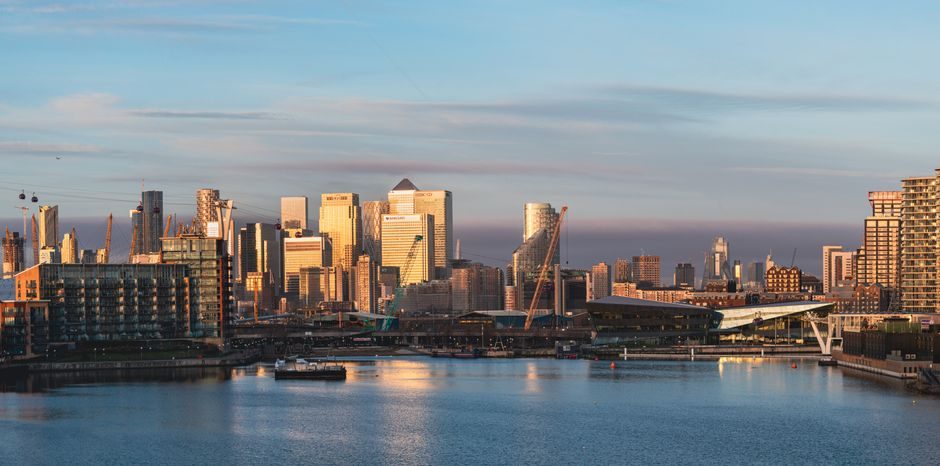
Penthouse-tier completion above Woodberry Down's 64-acre parkland — immediate occupancy, City skyline views.

London-based, trilingual UK property advisers for overseas and domestic buyers. Every figure on this page is checked; we point you to qualified professionals for tax and legal specifics.
Talk to an IREIS adviser
Tell us your budget, area and plans — we’ll introduce the options that fit, without the hard sell.


On desktop? Scan with your phone to start the conversation.